
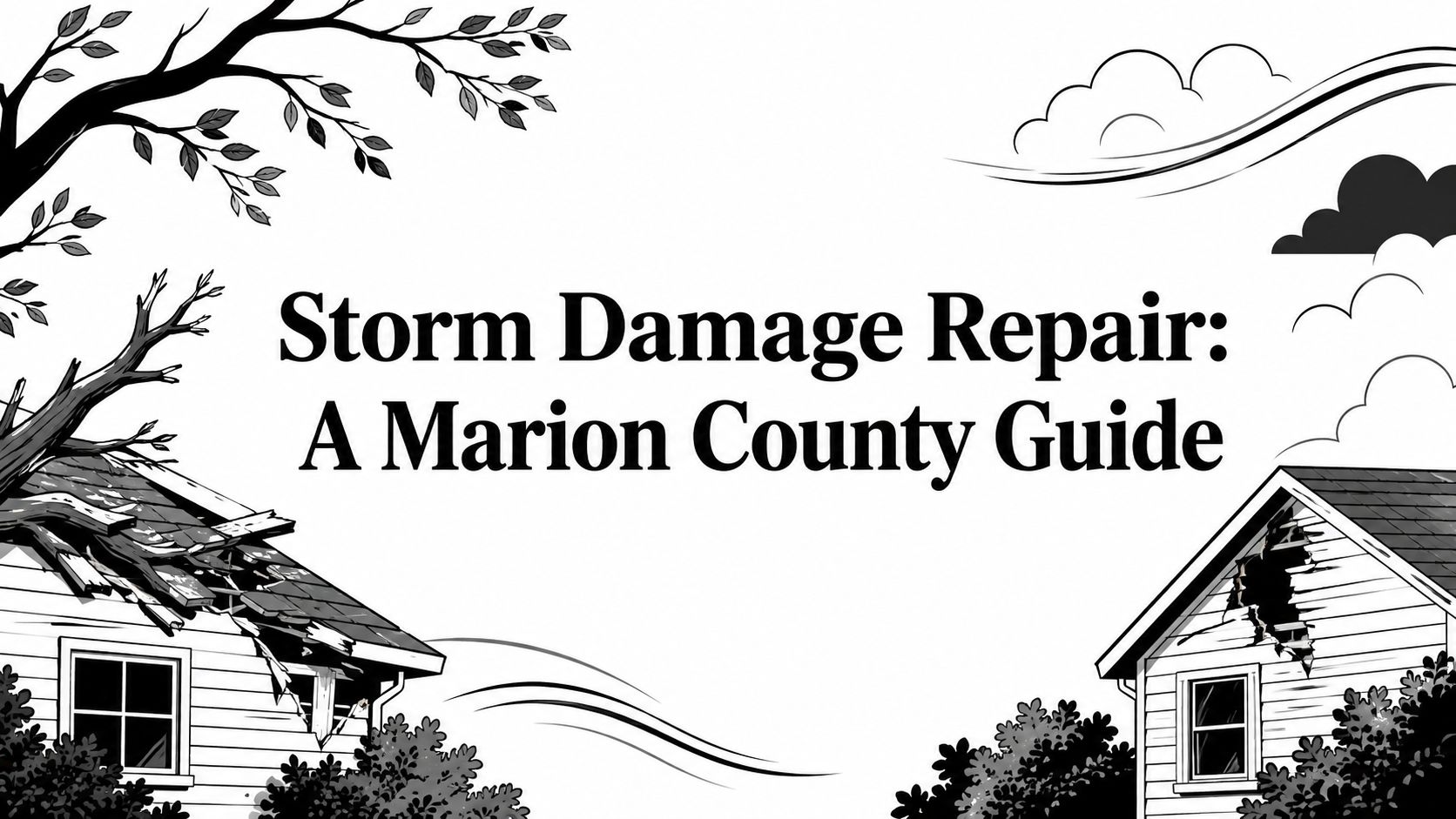
The storm has moved east, but your house may still be taking on water. In a Marion County neighborhood, that can mean a split limb over a roof in Belleview, a peeled tarp on a Dunnellon ranch, or a shredded lanai screen in The Villages. Inside, wet drywall smells sour, daylight shows through a roof opening, and a faint hiss from the attic may signal a broken pipe.
The quiet after a summer squall line can be more confusing than the storm itself. Homeowners often stand in the hallway trying to decide what matters first, whether the damage is covered, and which contractor can safely take over. Storm damage repair starts with stabilization, not cosmetic patching. The right sequence protects people, limits secondary damage, and creates the documentation needed for water damage restoration, mold remediation, roof work, and even fire damage clean up when lightning or electrical failure causes a fire.
When the Storm Clears and Your Home Is Exposed
A homeowner in Belleview may first notice the smell. Wet insulation, soaked drywall, and leaf debris create a damp odor before the full extent of the loss becomes obvious. In Dunnellon, a roof tarp may have peeled back overnight, allowing rain to run behind the fascia and into the attic. In The Villages, wind can tear through a lanai enclosure while the main structure appears untouched.
That contrast creates dangerous false confidence. A ceiling stain may look small while water sits above it. A fallen branch may have damaged shingles, flashing, or roof decking that can't be seen from the ground. If you see sagging drywall, cracked framing, exposed wiring, or water near electrical fixtures, leave the area and wait for qualified help.

The pause before action
People don't begin with a checklist. They walk from room to room, look at the ceiling, check on family members, and try to work out whether the house is safe. That pause is understandable, but it shouldn't last long once conditions allow a careful inspection.
Marion County properties also depend on drainage that must keep working after the roof and exterior are hit. If runoff is blocked by limbs, leaves, or damaged downspouts, water can collect around walls and slab edges. A practical reference for property owners is this Ocala flood prevention guide, which puts drainage maintenance into the larger context of reducing flood exposure.
The first objective isn't making the house look normal. It's stopping the next gallon of water from entering.
A tarp, bucket, or temporary board-up can protect the structure while a restoration crew assesses the loss. It can't prove that the roof, insulation, wall cavities, or flooring are dry. That distinction matters because storm damage repair often becomes a much larger rebuild when hidden moisture is sealed behind new materials.
The First 24 Hours After the Damage
The first day should be organized by risk, not convenience. Don't climb onto a wet roof, walk through standing water near outlets, or move beneath a leaning tree. Check from a safe position for downed power lines, damaged utility connections, structural movement, a gas smell, and sagging ceilings.
Start with safety and utilities
If the electrical panel is dry and accessible, shut off the main breaker when water has entered near electrical equipment. If the panel is wet, damaged, or surrounded by standing water, stay away and call the utility provider or an electrician. Shut off the water at the main valve if a supply line or attic pipe is leaking, and leave the gas valve to the gas company or another qualified professional when you smell gas.
Keep everyone out of unstable rooms. Don't use candles around a suspected gas leak, and don't run a portable generator indoors, in a garage, or near doors and windows. The EPA flood-cleanup guidance says portable generators should be operated outside and away from the home because carbon monoxide and fire hazards can turn a property loss into a life-threatening event.
Limit additional water damage
Once the property is safe, use buckets under active drips and towels beneath small leaks. Move electronics, documents, photographs, medication, and heirlooms to a dry room. If water is spreading across a floor, protect furniture legs with foil or blocks where safe, but don't drag heavy items across swollen flooring.
Photograph the water line and affected areas before moving contents. If the leak is active, take another photograph after an interval so the record shows whether the area is expanding. A restoration company can determine whether extraction, controlled demolition, or structural drying is appropriate.

Before lunch, contact your insurance carrier, a licensed restoration company for mitigation, and a qualified roofer or tarp service if the roof is breached. Homeowners looking for a concise checklist can also review these immediate steps after water damage.
Don't use a shop vac on wet carpet pad unless the equipment and electrical conditions are safe and the method is appropriate. Don't open every window in humid July weather, because outdoor humidity can slow drying. Don't sign a contractor's work authorization on the doorstep before the scope, rates, responsibility for emergency work, and estimate are written down. For roof openings, use this roof tarp installation resource as background, but leave roof access to trained personnel when conditions are unsafe.
Documenting Storm Damage for Your Insurance Claim
A strong claim file tells the story of the loss before cleanup changes the scene. Start outside and work inward. Photograph missing shingles in the direction they lifted, dented gutters, separated downspouts, damaged siding, fence panels on the ground, broken screens, fallen trees, and punctures caused by branches.
Then capture the building itself. Water lines on drywall, swollen baseboards, soft flooring near exterior walls, stained insulation, damaged ceilings, and wet contents should each appear in both context and detail. A wide shot shows the room, wall, and relationship between damaged areas. A close-up shows the lifted shingle, buckled plank, serial number, or water mark an adjuster needs to evaluate.
Build a record that survives memory gaps
Use timestamped photos and short video walk-throughs. Narrate the room name and visible condition without guessing about the cause. Preserve damaged materials when practical, especially failed roofing, broken fixtures, and sections of flooring, unless leaving them in place creates a safety or contamination risk.
| Area | Wide Shot | Close-Up Detail |
|---|---|---|
| Roof and exterior | Entire roof slope, elevation, gutters, and surrounding debris | Missing shingles, torn flashing, punctures, dents, and exposed decking |
| Interior rooms | Full room showing ceiling, walls, floor, and contents | Water lines, swollen trim, soft spots, stains, and damaged finishes |
| Personal property | Furniture and belongings in the affected room | Brand, model, serial number, condition, and visible saturation |
| Outbuildings and yard | Fence, shed, lanai, trees, and access areas | Broken panels, impact points, displaced materials, and drainage blockage |
Create one dedicated folder for the claim. Keep receipts for tarps, emergency board-up, temporary lodging, cleaning supplies, and replacement items. Add contractor notes, adjuster correspondence, daily equipment logs, and moisture readings. If flooring or drywall is removed, photograph its age and condition before tear-out, then retain invoices and disposal records.
Avoid statements such as “the entire roof is ruined” unless a qualified inspection supports that conclusion. Describe what you observed. A clear record helps the carrier, contractor, and homeowner compare the original condition with the mitigation and repair scope without relying on recollection.
What a Professional Restoration Crew Actually Does
A professional crew's first visit should look orderly, not rushed. The lead technician walks the property with the homeowner, identifies immediate hazards, records affected rooms, and separates emergency stabilization from reconstruction. If a roof opening exists, a roofer or structural carpenter may handle tarping, board-up, or temporary protection while the mitigation team addresses water inside.
From visible loss to moisture map
Technicians use thermal imaging to identify temperature anomalies and pin or pinless meters to test materials. A thermal camera doesn't measure moisture by itself, but it can help locate areas that deserve closer meter testing. The crew may map ceilings, drywall, baseboards, subfloors, cabinets, and attic insulation rather than drying only the stain that caught your eye.
Water extraction follows the assessment. Commercial extractors remove accessible water, while air movers and low-grain refrigerant dehumidifiers control evaporation and humidity. Crews may remove wet drywall, insulation, carpet pad, or flooring when those materials can't be dried safely or when contamination makes salvage inappropriate.

What happens after equipment arrives
The team should revisit the property, inspect equipment operation, and record environmental and material readings. Drying isn't complete because a machine has been running. The affected assemblies need to reach an appropriate dry condition before the crew removes equipment and closes walls.
The process then moves from mitigation to reconstruction. That handoff may involve a separate estimator, carpenter, roofer, flooring installer, electrician, or HVAC professional. For roof replacement context, a homeowner may find a useful visual reference in this replacing shingle roof image, but an image can't substitute for a roof-system inspection.
Ask one question before signing:
What readings will you take, where will you take them, and what written evidence will show that the structure is dry before reconstruction begins?
The restoration company process guide can help homeowners understand the difference between emergency mitigation, cleaning, and rebuilding. Eagle Restoration is one Marion County option that handles water mitigation, storm damage restoration, fire and smoke damage repair, sewage cleanup, odor removal, and mold remediation.
Timeline and Cost Factors for Marion County Repairs
A storm repair invoice reflects more than the visible hole in the roof. The calendar may depend on safe weather, permit requirements, adjuster availability, material sourcing, drying conditions, and whether the work involves structure or finishes. A small interior patch can move quickly, while a roof failure with saturated insulation, damaged decking, and code-related work needs more coordination.
Some timing factors are fixed or difficult to control. Marion County permit requirements can affect structural and roof work. Regional demand can limit roofer and material availability after a major event. Insurance inspections and scope approvals may also determine when permanent work starts, even if emergency mitigation begins immediately.
Other factors are within the homeowner's control. Prompt reporting, complete photographs, accessible rooms, fast decisions on approved scope, and a contractor who writes clear estimates can reduce avoidable pauses. Delaying extraction or leaving wet materials in place often increases labor, demolition, cleaning, and reconstruction needs.
| Repair Phase | Typical Duration | Cost Range | Main Cost Driver |
|---|---|---|---|
| Emergency tarp or board-up | Varies by access and damage | Varies by roof size, materials, labor, and urgency | Roof pitch, openings, debris, and safe access |
| Water extraction and drying | Varies by moisture load and building materials | Varies by equipment, labor, and monitoring | Standing water, humidity, affected assemblies, and equipment time |
| Drywall and insulation removal | Varies by affected area and containment needs | Varies by square footage, disposal, and access | Depth of saturation, contamination, and wall construction |
| Roof repair or replacement | Varies by inspection, materials, and permitting | Varies by roof system, decking, flashing, and labor | Damage extent, code requirements, and material availability |
| Full mitigation and reconstruction | Varies from a limited repair to an extended rebuild | Varies by combined trades and finish selections | Structural damage, hidden moisture, contents, and finish matching |
The table intentionally avoids made-up price promises. A responsible contractor should inspect first, separate emergency services from reconstruction, explain assumptions, and identify what could change the scope. Code-mandated work and insurer-required documentation aren't the same as optional upgrades, so ask for those items to be labeled separately.
Working With Insurance Adjusters on a Storm Claim
Two claim paths appear repeatedly after Marion County storms. In the smoother path, the homeowner sends organized photographs, the contractor documents mitigation, and the adjuster sees the same affected areas during inspection. In the stalled path, the estimate omits rooms, depreciation is applied differently than expected, or supplemental items sit without a clear response.
The first submission
Send the carrier the loss description, date discovered, photographs, video, temporary repair receipts, contractor contact information, and a list of affected rooms and contents. Don't wait for perfect documentation before reporting the claim. Add information as the inspection and drying process reveal more.
An adjuster's estimate and a contractor's estimate may use different line items, quantities, labor assumptions, and repair methods. Read them side by side. If the contractor identifies wet insulation above a ceiling, damaged subfloor beneath flooring, or required flashing and code work, ask for photographs, moisture readings, manufacturer instructions, and code references supporting the supplement.

Contractor supplements and public adjusters
A restoration contractor can submit supplements for work discovered during mitigation or reconstruction. A public adjuster represents the policyholder in claim preparation and negotiation, usually under a separate agreement. Those roles aren't interchangeable, and a homeowner should understand fees, authority, and communication responsibilities before hiring either.
Practical effectiveness comes from evidence rather than argument. Manufacturer specifications can show why a repair method is required. Building code citations can explain necessary upgrades. Photos can establish that a line item was damaged, while moisture logs can support water extraction, drying, demolition, or mold remediation.
The storm damage insurance claim process offers additional background for organizing the stages. Keep a written communication log with the date, representative, claim number, documents sent, requested action, and next follow-up. Send concise emails, confirm phone conversations in writing, and ask directly whether an item is denied, pending, or approved.
A stalled claim needs a documented question, not a string of unanswered calls.
Don't let the claim process push you into unsafe work or premature reconstruction. Mitigation can often proceed to protect the property, while permanent repairs may wait for scope clarification and required approvals.
Hidden Damage That Turns a Quick Repair Into a Rebuild
A dry-looking ceiling doesn't prove the building is dry. Water can remain in attic insulation above sealed drywall, wick into baseboards and wall edges, swell subfloor beneath floating laminate, or enter HVAC pathways that circulate humid air through a closed house.
Marion County's warm, humid conditions make moisture verification especially important. The EPA warns that materials staying wet for more than two days usually become moldy, and its flood-cleanup guidance recommends at least an N-95 respirator, goggles, and protective gloves during cleanup. Those figures and protective measures come from the EPA indoor air quality flood-cleanup guidance.
Surface patching versus controlled drying
A surface-level repair replaces stained drywall, paints the ceiling, and leaves the underlying assembly untested. That approach may look finished while trapped moisture continues damaging insulation, framing, flooring, or contents. Mold remediation may then become necessary, and a clean-looking wall can require later demolition.
A proper inspection combines pin and pinless moisture meters with thermal imaging. The thermal camera helps locate temperature differences, while meters verify whether materials are elevated. Technicians should compare readings with unaffected materials, record locations, and remove only what the evidence and safety conditions justify.
The IICRC S520 standard addresses mold remediation procedures for residential, commercial, and institutional buildings, including structures and contents. The IICRC S500 standard information covers professional water damage restoration for similar building types. These standards reinforce the distinction between emergency stabilization, drying, remediation, cleaning, and reconstruction.
The question that protects the rebuild
Ask the contractor to show the moisture map, explain the readings, identify any remaining wet insulation or subfloor, and state what condition must be met before walls and floors are closed. Skipping verification can also create disputes with flooring and drywall manufacturers when installation occurs over damp materials.
The measure of storm damage repair isn't how quickly a tarp goes on. It's whether the assemblies behind the walls and beneath the finishes dry to an appropriate pre-loss condition before the rebuild hides them again. When fire damage clean up is also involved, the same discipline applies to soot, odor, moisture, and damaged contents. The professional disaster restoration sequence places stabilization before drying, containment, cleaning, mitigation, and reconstruction.
Eagle Restoration provides 24/7 storm damage restoration, water extraction and drying, mold remediation, and fire damage clean up for homes and businesses in Ocala, Belleview, Dunnellon, and The Villages. If your property has an active leak, hidden moisture, smoke damage, or unsafe interior conditions, visit Eagle Restoration to request a consultation and begin the restoration process.


Leave a Reply